

10 Facts about Serengeti National Park
10 Facts about Serengeti National Park
10 facts about Serengeti National Park are some of the most interesting and fun, as well as educative things about Serengeti National Park that you may not have known. As you get to plan and look forward to embarking on one of the most unforgettable Tanzania safaris to Serengeti National Park, getting to know some of the most interesting 10 facts about Serengeti National Park would be great.
Serengeti National Park Tanzania, is located in the northern part of Tanzania, making one of the northern safari circuit national parks in Tanzania. Serengeti National Park is the most visited and sought after national park in Tanzania, with hundreds of thousands of tourists visiting every single year. Serengeti National Park is a massive protected area covering over 14763 square kilometers of space teeming with a variety of wildlife especially the most sought after big five. The Serengeti National Park is famous because of the Great wildebeest Migration, which is the world’s biggest land migration where over 1 million wildebeests and hundreds of thousands of herbivores like gazelles and zebras do cross the Mara River to Maasai Mara National Reserve Kenya. There are a number of reasons why travelers do choose to visit Serengeti National Park, and among them include to witness the great migration, the African big five sightings, animals in Serengeti National Park, birds, and amazing landscape and scenery among so many others. As you prepare to visit Serengeti National Park on a Tanzania safari tour, below are some of the amazing top 10 facts about Serengeti National Park that you should know;
- Home to the Great Wildebeest Migration
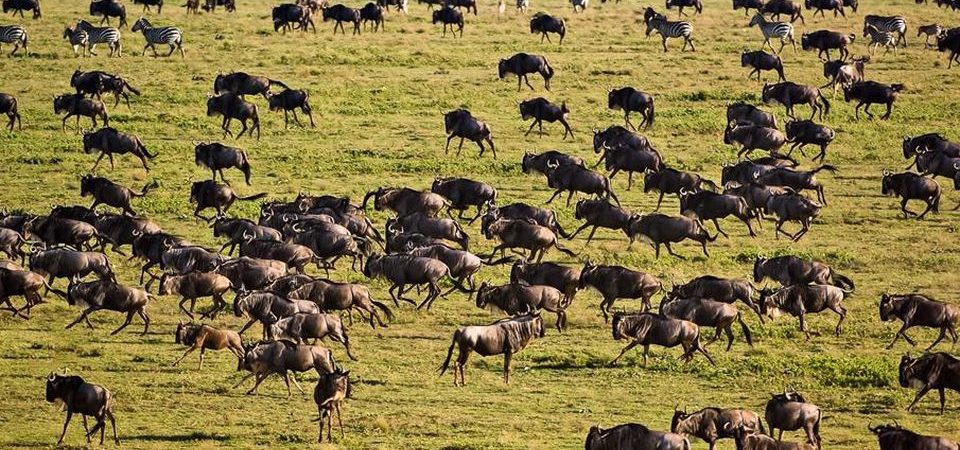
The great wildebeest migration is one of the Seven Wonders of the World, and it takes place in the Serengeti National Park. Witnessing the great migration is the most sought after and popular event in Serengeti National Park. the great wildebeest migration is an annual even regarded as a natural spectacle, that sees over 1 million wildebeests and other herbivores moving in cycles around the Serengeti National Park till they make the iconic river crossings of the Grumeti River and Mara River infested with crocodiles which fest on them, as well as predators on shores like lions and leopards.
- Hosts the largest predator population
One of the 10 facts about Serengeti National Park is that the park hosts the largest predator population not only in Africa but also in the entire world. Commonly seen predators in Serengeti National Park include lions, as well as tree climbing lions, and others like leopards, cheetahs, hyenas, Jenet cats, wild dogs, among so many others.
- Big Cats
Serengeti National Park is a great place to see the big cats, also almost so easily. The three big cats in Serengeti National Park include lions, leopards and cheetahs, lions are seen almost in most parts of the park especially up on the kopjes in the Serengeti National Park, while cheetahs are commonly seen in the south-eastern plains of the Serengeti Park. Leopards on the other hands can be easily spotted lazing on tree branches in the [ark especially around the Seronera River.
- Over 500 bird species
There are over 500 bird species recorded in Serengeti National Park, which perfectly blend the park’s wildlife species. with over 500 birds in Serengeti National Park, the park is indeed a birder’s paradise with travelers being able to spot quite a good number of bird species. Some of the Serengeti National Park birds that travellers can spot include martial eagles, Kori bustards, starlings, vultures, ostriches, among so many others.
- Oldest Ecosystem in the world
One of the most fascinating and interesting fact about Serengeti National Park is that the Serengeti has the oldest ecosystem in the world, with unique and diverse flora and fauna only found in the Serengeti and not anywhere else in the world.
- Kopjes
The Serengeti National Park has granite rocks which are scattered around the park, commonly known as kopjes. These kopjes dot the vast savannah plains of the Serengeti National Park, and are a perfect sitting area for lions and other predators which use them as hiding grounds as they spot out their next prey watchfully. The lions use the kopjes also as places from where to enjoy a bit of sunbathing from, relaxing, mating, or even devouring their kill.
- One of the oldest Africa national parks
The Serengeti National Park is one of the oldest national parks in Africa. The Serengeti National Park was first named by a European explorer in 1921, but it was in the year 1951 that the park was gazetted as a national park in Tanzania to protect and conserve the amazing wildlife that thrives in the park including the African big five, big cats, vast savannah grasslands, among so much more.

- UNESCO World Heritage Site
One of the 10 facts about Serengeti National Park is that it is a UNESCO World Heritage Site recognized for her unique ecosystem and diverse wildlife. The Serengeti National Park was listed as a UNESCO World Heritage Site in 1979, and is also a protected park under the International Union for Conservation of Nature (IUCN).
- The Masai Tribe
The Maasai tribe are the original and indigenous inhabitants of the park and the areas around it, which they still do inhabit to date. The Maasai people lived and coexisted with the animals and all that the park entailed, grazing their cattle alongside with animals. Just within the vicinity of the Serengeti National Park, you can visit the Maasai village from where you can get to live and experience the way of life of the Maasai, see where they live and take part in a number of activities like their traditional song and dance of jumping up high.
- Elevation and climate
One of the 10 facts about Serengeti National Park is that the elevation of Serengeti National Park is at 3020-6070 meters above sea level, with a favorable climate which makes it possible to visit it all throughout the year. The best time to visit the Serengeti National Park is however during the dry season when the grass is much shorter and the Great Wildebeest Migration is at its peak with iconic river crossings common then.

