

Real Facts About the Ngorongoro Conservation Area
Real Facts About the Ngorongoro Conservation Area : The Ngorongoro Conservation Area is 180 kilometers west of Arusha city. It is Tanzania’s protected region and a UNESCO World Heritage Site. It was previously part of the Serengeti national park, but it was split and designated as a conservation area to allow the Maasai people to coexist with the wild wildlife. The Ngorongoro Conservation Area Authority (NCAA), an institution of the Tanzanian government, administers the Ngorongoro Conservation Area, unlike other Tanzanian national parks, which are under the Tanzania National Park Authority.
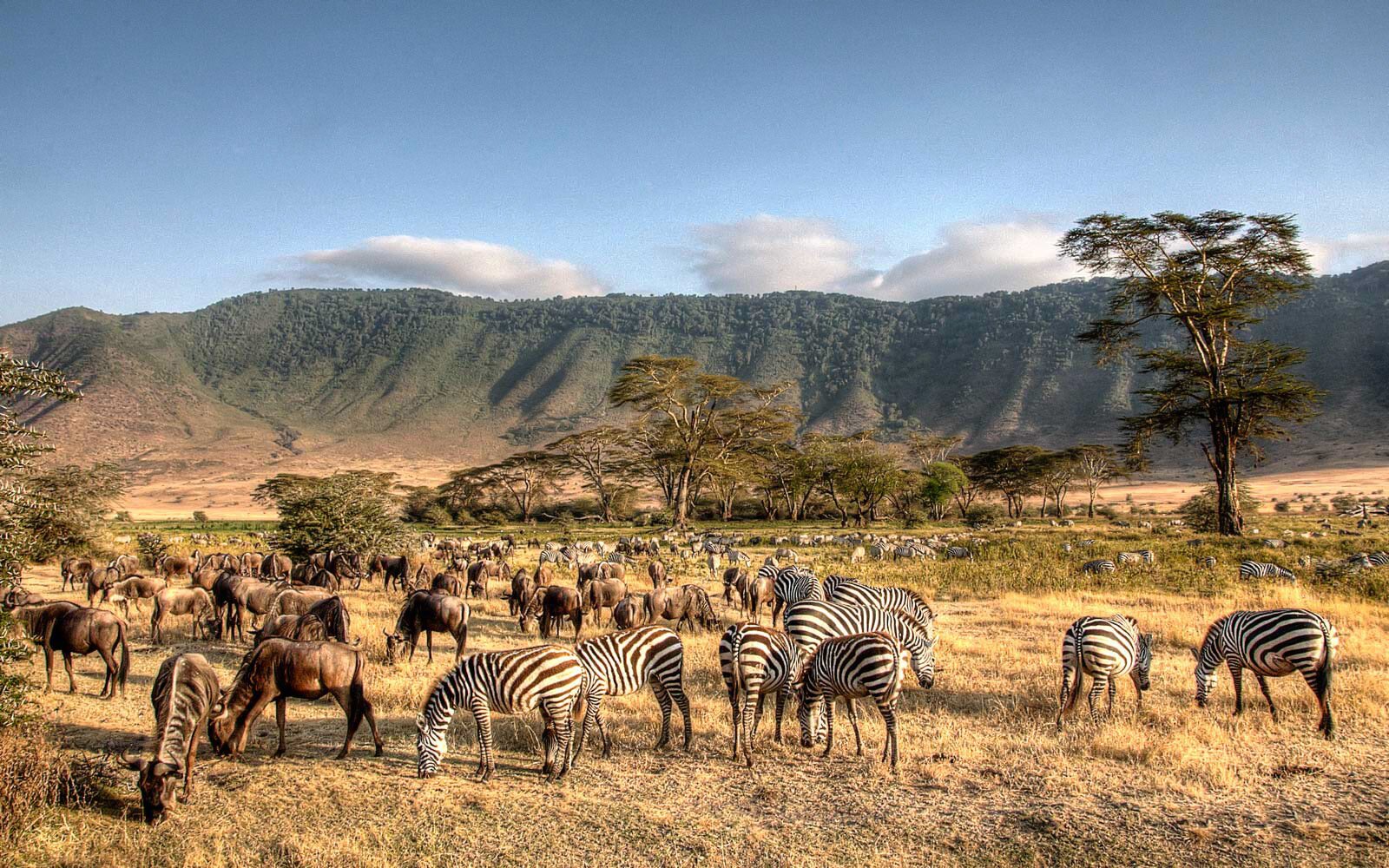
The Ngorongoro Conservation Area offers numerous attractions and, along with the Serengeti and Kilimanjaro, is one of the most popular tourist destinations in the world. The Ngorongoro conservation region is home to three craters: the Ngorongoro crater, the Empakai crater, and the Olmoti crater, with the Ngorongoro crater serving as the area’s main attraction. Other attractions in Ngorongoro include the larger populations of wildlife inside the crater, including larger mammals, small mammals, bird species, and so on. It is the ideal spot to witness the big five, with lions and buffalos leading the group.
The Ngorongoro Conservation Area is home to a variety of ecosystems and vegetation that support the survival of the area’s animals. Ngorongoro’s vegetation includes lush green, rain-fed vegetation as well as arid plants. Uncultivated lowland vegetation, arid and semi-arid plant communities, plentiful short grass for grazing, and highland forests are also found in the area.
The steep slopes of the Ngorongoro crater are covered in scrub heath, meadows, high open moorland, and the remnants of dense evergreen forests, as well as highland trees like Peacock Flower, Yellow-Wood, Hagenia abyssinica, and Sweet Olive. On Oldeani Mountain, there are also lengths of pure bamboo, as well as pencil cedar on Makarut Mountain to the west. Lower slopes are dominated by doveweeds, while upland forests contain Red Thorn Acacia and Gum Acacia, which are important for watershed protection.
12 FACTS ABOUT NGORONGORO CONSERVATIONAL AREA
- The Ngorongoro crater is thought to have formed about 2.5 million years ago when the cone of a large active volcano collapsed inward after a major eruption, leaving the existing massive, uninterrupted caldera as its main trace.
- The stunning environment of the Ngorongoro Crater, Africa’s Garden of Eden, is home to roughly 25,000 creatures, including ungulates, the Big Five, and other mammals. It’s also the best place in the world to see critically endangered creatures such as black rhinos, golden cats, and wild hunting dogs.
- Before the eruption and formation of the crater, when it was a volcano, the crater is considered to have been around the same size as Mount Kilimanjaro, one of the world’s highest mountains. The crater is 610 meters deep and 260 kilometers in diameter.
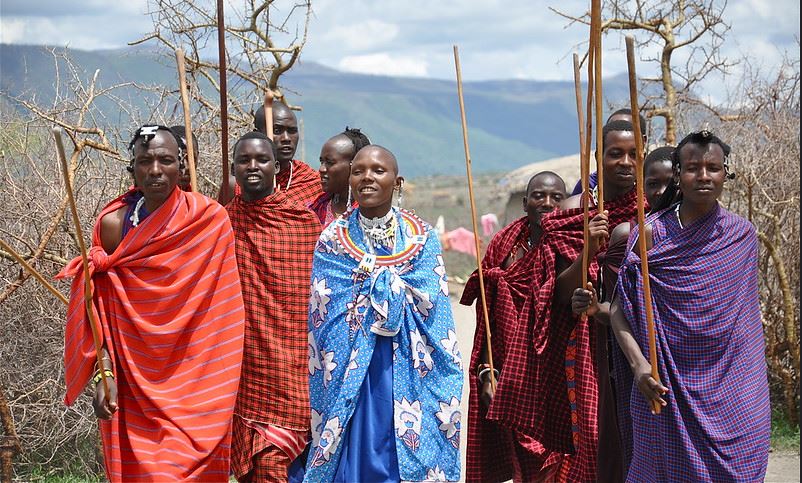
- In the Ngorongoro reserve region, some 30,000 Maasai people practice local grazing. They live on a piece of property that is home to a diverse range of species within the Ngorongoro. There are over 30,000 animals, including leopards, cheetahs, elephants, and hyenas, as well as warthogs, buffalo, and impalas. It’s also one of the best sites to witness black rhinos an endangered animal species.
- There are a large number of wild creatures in the area. The Ngorongoro crater is home to nearly all of Tanzania’s diverse animal species, although there are no giraffes. They are unable to enter because the walls are too steep for them to walk down. Outside of the crater, however, you’ll still be able to find them.
- The Ngorongoro Conservation Area is part of the Serengeti ecosystem, which is both beautiful and iconic. The conservation area is close to Serengeti National Park, one of the top safari parks in the world, and shares its borders with the Ndutu area. As a result, combining both world-famous parks creates the ideal African-Tanzania safari experience.
- Because of its natural splendor, the Ngorongoro Conservation Area is home to a variety of attractions and wonders, particularly in the Ngorongoro Crater. In 1979, the Ngorongoro Crater was designated as a UNESCO World Heritage Site, together with two additional craters (Olmoti Crater and Empakai Crater). It’s also one of Africa’s seven natural wonders.
- The Ngorongoro Conservation Area is one of the world’s most significant historic sites. The Conservation Area includes Olduvai Gorge, which was the site of a major archaeological discovery in the 1950s. The fossils unearthed here are thought to represent the earliest known evidence of the human species, and they have greatly contributed to our knowledge of evolution, Real Facts About the Ngorongoro Conservation Area .
- Ngorongoro tourism is important for Tanzania’s economic growth since it is one of the parks, along with Serengeti, that attracts a considerable number of people, especially during the dry season. However, visitor numbers are closely managed to avoid environmental damage within the crater.
- The Ngorongoro Conservation Area is one of the few places in Africa where celebrities such as Prince William, Bill Clinton, and the Queen of Denmark have visited.
- If you’re a fan of the Oscar-winning film known as Out of Africa, you’ll be pleased to learn that several scenes from this great film were shot in the Ngorongoro Conservation Area.
- Because of its dazzling beauty and wildlife sanctuary, the Ngorongoro Crater is also known as “the Garden of Eden.” Because the crater has varied wildlife habitats, it attracts a larger number of wildlife animals, such as the big five, birds, and other animals. However, don’t expect to see giraffes within the crater.
WHEN IS THE BEST TIME TO VISIT THE NGORONGORO CONSERVATION AREA?
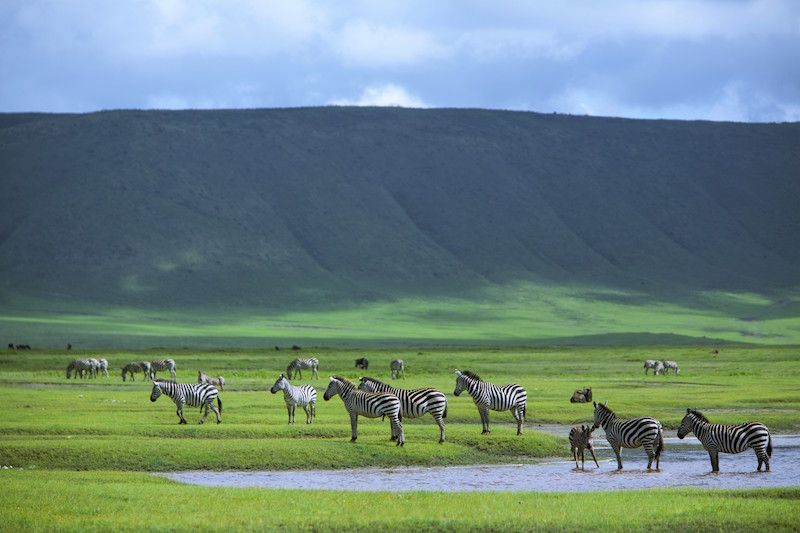
You will undoubtedly want to start planning your vacation to the Ngorongoro Conservation Area now that you know the facts about it. The optimum time to visit the Ngorongoro Conservation Area and see all of the above-mentioned world wonders is from June to late October, which is also Tanzania’s tourist high season. On the other hand, the Ngorongoro conservation area can be visited at any time of year, but the dry season is the best time to visit.
When compared to the wet season, wildlife watching in the Ngorongoro conservation region is better and more comfortable during the dry season. Bird watching and appreciating the true evergreen nature of the Ngorongoro Conservation Area are greatest during the rainy season.

